
Microdose transition instructions
This content is provided for educational and informational purposes only and does not constitute providing medical advice or professional services. The information contained herein should not be used for diagnosing or treating a health condition, and those seeking medical advice or guidance should consult with a licensed and qualified healthcare provider. Always seek the advice of a qualified healthcare provider regarding a medical condition. Never disregard professional medical advice or delay in seeking it because of something you have learned here or elsewhere.
If you think you may have a medical emergency, call 911 or go to the nearest emergency department immediately. No physician-patient or provider-patient relationship is created by this website or its use. Boulder Care makes no representations, express or implied, with respect to the information provided herein or to its use.
The microdose method is a way to start buprenorphine-naloxone (the medicine in Suboxone) without going into withdrawal first. You take very small amounts of buprenorphine while slowly using less of other opioids, and you work up to your full dose over about a week.
You can take your first dose within a few hours of using another opioid. The first doses are small enough that they won't cause major precipitated withdrawal (sudden, intense withdrawal).
- Pros: You skip withdrawal entirely, and you can keep using other opioids while you transition.
- Cons: It takes about a week and follows a detailed daily schedule. During that week, buprenorphine isn't protecting you from overdose yet.
Staying safe during your transition week
While you transition, use only as much fentanyl, heroin, pain pills, kratom, 7-OH, or other opioids as you need to keep from getting sick. Once you don't have cravings for them anymore, you can stop. Buprenorphine will keep you feeling well.
During this week, buprenorphine isn't protecting you from overdose yet. To stay safer:
- Keep Narcan (naloxone) nearby.
- Don't use alone.
- Start with a small test dose.
- Test your supply when you can so you know what you're taking.
Days 1 to 5: use your 2 mg films or tablets
Day 1: Take ¼ film or tablet (0.5 mg). You can keep using other opioids, like fentanyl, heroin, pain pills, kratom, 7-OH, to prevent withdrawal.
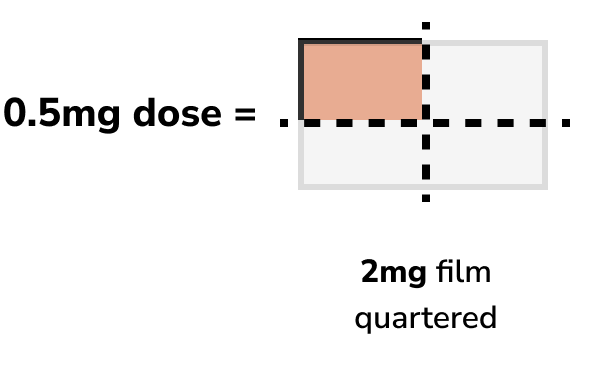
Day 2: Take ¼ film or tablet (0.5 mg) in the morning and ¼ film or tablet (0.5 mg) in the evening. You can keep using other opioids to prevent withdrawal.
Day 3: Take ½ film or tablet (1 mg) in the morning and ½ film or tablet (1 mg) in the evening. You can keep using other opioids to prevent withdrawal.
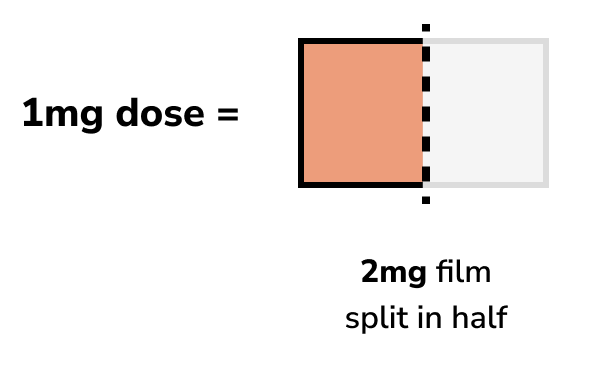
Day 4: Take 1 film or tablet (2 mg) in the morning and 1 film or tablet (2 mg) in the evening. You can keep using other opioids to prevent withdrawal.
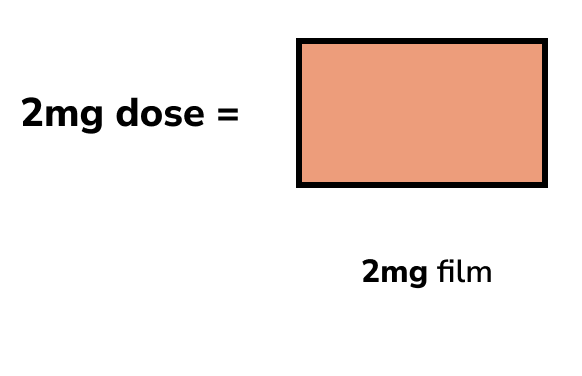
Day 5: Take 1½ films or tablets (3 mg) in the morning and 1½ films or tablets (3 mg) in the evening. You can keep using other opioids to prevent withdrawal.
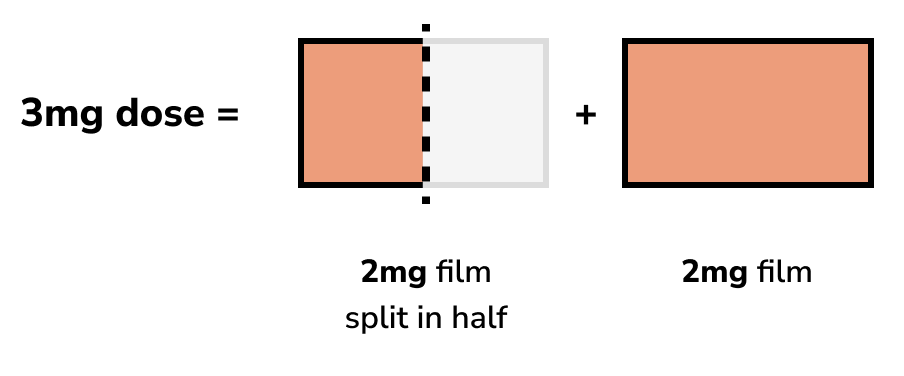
Days 6 and 7: switch to your 8 mg films or tablets
By now, you may not need other opioids at all.
Day 6: Take ½ film or tablet (4 mg) in the morning, ½ film or tablet (4 mg) in the afternoon, and ½ film or tablet (4 mg) in the evening.
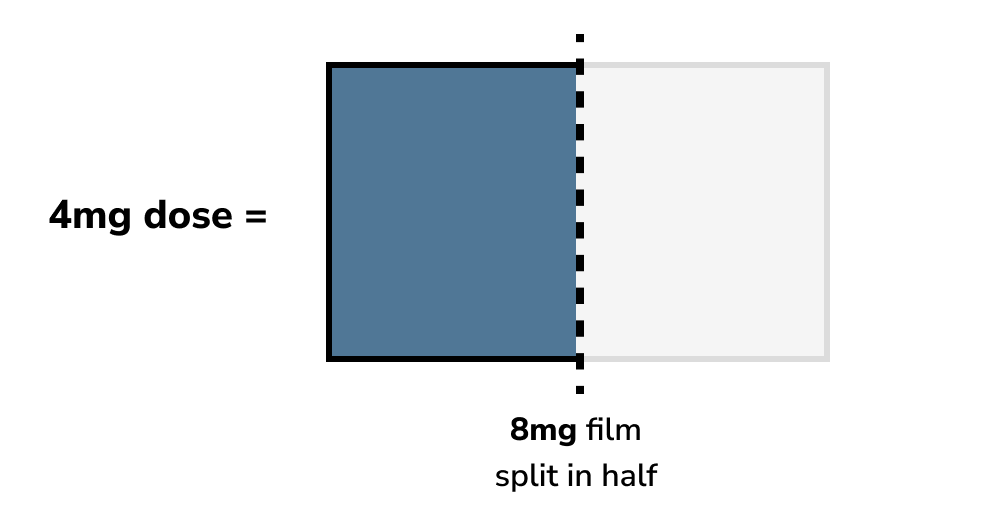
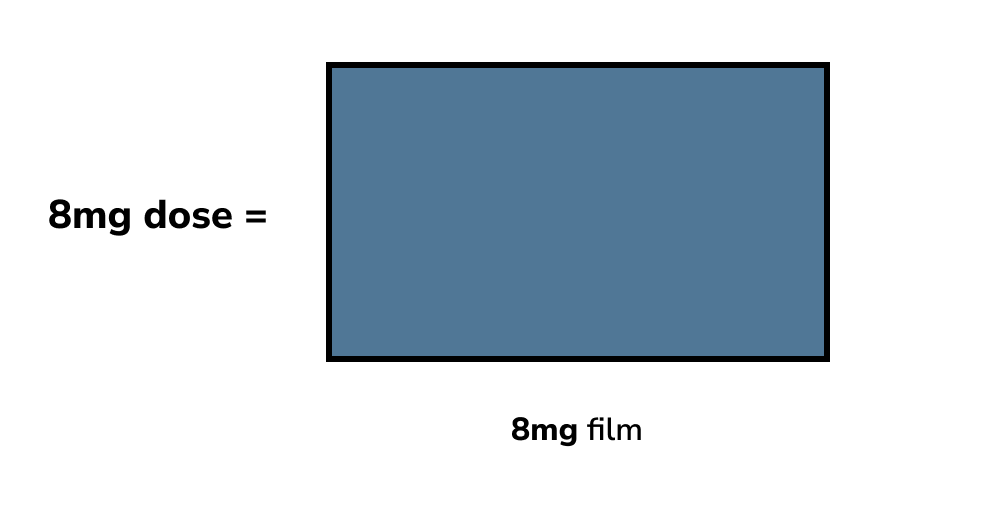
Day 7: Take 1 film or tablet (8 mg) in the morning and 1 film or tablet (8 mg) in the afternoon.
What happens next
At your next visit, you and your clinician will work together to find the right daily dose for you. Most people take between 16 and 24 mg a day.
The goal is for you to feel like your usual, healthy self. If your dose is too low, you may feel withdrawal between doses. If it's too high, you may feel sleepy and slow. The right dose can change slowly over time as your body adjusts to daily treatment.
If something doesn't feel right
If you're having a hard time with withdrawal, or anything worries you, call 888-316-0451 or message your care team right away. You don't have to wait for your next visit. If Boulder is closed, you can still reach an on-call medical provider 24/7 at the same number.